
Water Heater Repair in the USA
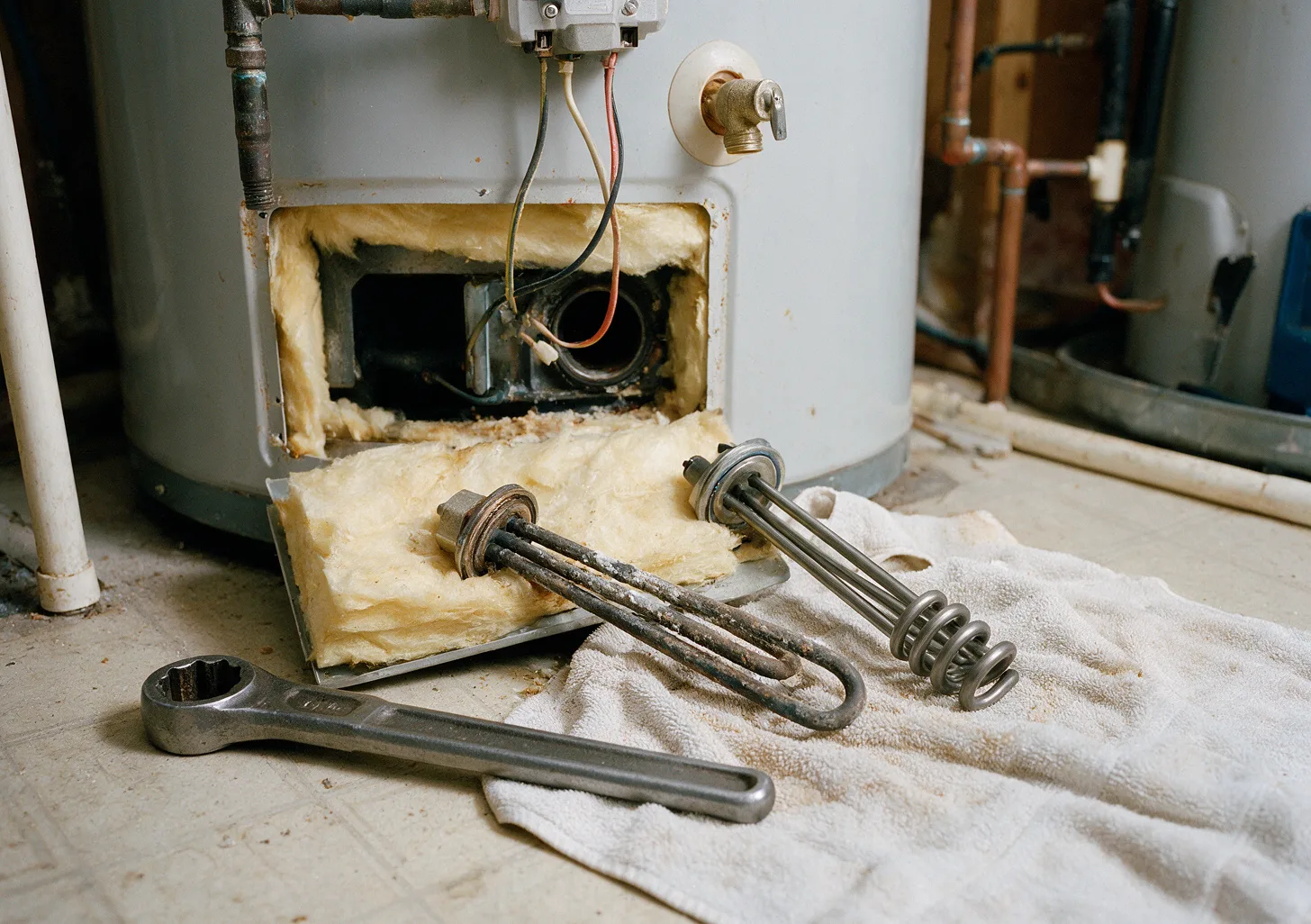
A water heater that fails to deliver consistent temperature often points to sediment accumulation at the tank base or a burned-out lower element. Homeowners can first confirm the breaker has not tripped and that the gas valve remains open before calling for service. Our technicians carry replacement elements rated for the specific voltage and wattage of the unit.
Thermostat drift causes water to overheat or stay lukewarm. Technicians remove the access panel, test the upper and lower thermostats with a multimeter, and compare readings against the dial setting. Anode rod depletion accelerates tank corrosion and leads to pinhole leaks that require full replacement rather than patch repairs. Luna Plumbing supports homeowners facing water heater repair by directing them to our homepage about drain cleaning throughout the USA.
Warning Signs of Water Heater Trouble
- Rusty water appears only from hot taps and clears after several minutes.
- Popping or rumbling sounds occur while the burner or element cycles.
- Water temperature fluctuates between scalding and barely warm during use.
- Moisture collects at the base or around pipe connections on the tank.
- Hot water runs out faster than normal even with reduced household demand.
Measurements Taken on Site
Technicians first record incoming voltage or gas pressure to establish baseline conditions. On electric models they isolate each element, check resistance values between ten and twenty ohms, and confirm the ground connection. Gas units receive a combustion analysis that measures flame color and vent draft to identify blocked flue paths.
Temperature rise across the tank is measured with an infrared thermometer at multiple points. A difference greater than twenty degrees between top and bottom indicates heavy sediment. The pressure relief valve is lifted briefly to verify it reseats without dripping and that discharge piping routes safely outdoors.
Repair Choices Available
Failed upper or lower elements are swapped using the same wattage and length as the original. Thermostats are replaced when calibration is off by more than ten degrees. When the dip tube has broken, a new tube restores proper cold water entry at the tank bottom and prevents mixing.
Anode rod replacement extends tank life when the existing rod is more than fifty percent consumed. Full unit replacement becomes necessary once the glass lining fails and leaks appear at multiple seams. Our technicians match the new tank capacity and fuel type to the existing connections and venting.
Parts and Materials Used
Heating elements are screw-in or flange style with Incoloy sheaths rated for hard water. Thermostats carry adjustable ranges from ninety to one hundred fifty degrees. Dielectric unions prevent galvanic corrosion at copper to steel junctions during repiping after tank change-out.
Expansion tanks are sized to the water heater capacity and pre-charged to household pressure. Temperature and pressure relief valves meet the BTU rating of the unit and include a test lever. Sediment flush valves allow annual draining without removing the drain plug each time.
Actions Before Help Arrives
Locate the main water shutoff and confirm it turns the supply off at the heater inlet. Switch off the breaker for electric units or set the gas valve to pilot only if a leak is visible. Avoid opening the pressure relief valve until a technician confirms the tank is not over-pressurized.
Note the model number and serial from the data plate to speed part selection. Keep children and pets away from any pooling water. Record the time when hot water first became unavailable so the technician can estimate how long the unit has been without power or gas.
Water Heater Repair questions
Why does my water heater make noise?
Sediment settles on the bottom and traps steam bubbles that collapse against the metal. Flushing removes the layer and quiets the tank. If noise continues after flushing, the lower element may be coated and requires replacement to restore even heating.
How often should the tank be flushed?
Annual draining through the bottom valve removes mineral buildup that reduces capacity and shortens element life. The process takes about thirty minutes and requires a garden hose routed to a floor drain. Technicians perform this during routine service visits.
Can a leaking tank be repaired?
Small leaks at fittings can be corrected by tightening or replacing dielectric unions. Once the tank wall itself leaks through corrosion, the unit must be replaced. Patching the tank violates safety codes and risks sudden rupture under pressure.
What size expansion tank is needed?
The expansion tank must equal or exceed the water heater capacity in gallons and be pre-charged to the household static pressure. Proper sizing prevents relief valve discharge during recovery cycles. Technicians calculate this based on measured pressure and tank volume.
Water Heater Repair
Contact Luna Plumbing to schedule Water Heater Repair and restore consistent hot water.