
Pipe Repair in the USA
Pipe failures often start at joints or in sections exposed to repeated temperature swings. Our technicians trace the run from the main shutoff to the affected fixture and measure wall thickness with a gauge to decide whether a patch or full segment replacement will hold pressure.
When a line is buried under a slab the crew first isolates the section by closing valves at both ends then uses a camera to confirm the exact break point before any concrete is opened. This sequence keeps the rest of the system in service until the repair is complete. Luna Plumbing suggests exploring the homepage drain cleaning section following any pipe repair call in the USA.
Noticeable Changes in the System
- Water pressure drops in one area but stays steady elsewhere.
- Rust colored water appears after the tap runs for a few seconds.
- Damp patches form on floors or walls near pipe routes.
- A faint hissing sound continues even when fixtures are off.
- Sewer odors rise from floor drains during heavy rain.
Common Triggers for Pipe Damage
Corrosion eats through galvanized steel from the inside while tree roots crack clay or cast iron sewer lines from the outside. Freezing water expands and splits copper at elbows. High water pressure accelerates wear on older soldered joints and creates pinhole leaks that drip steadily behind walls.
Technicians check the age and material of each pipe run during the first visit so they know whether the failure is isolated or part of a larger pattern that will need further sections replaced later.
Inspection Steps Our Technicians Follow
They start at the meter and work toward the problem fixture while recording static and flowing pressure at each accessible point. Visual checks include looking for green or white crust at fittings and listening with a stethoscope for internal turbulence. A moisture meter is used on nearby drywall to map the extent of any hidden leak.
If the line is under a slab a small access hole allows the camera to travel the pipe and record distance to the fault so the crew can open only the necessary floor area.
Repair Choices and Materials Used
For a single pinhole a copper or PEX coupling is soldered or crimped in place. Longer damaged runs are replaced with new copper type L or PEX tubing matched to the existing diameter. Sewer sections are restored with PVC schedule 40 or ABS depending on local code and the original material.
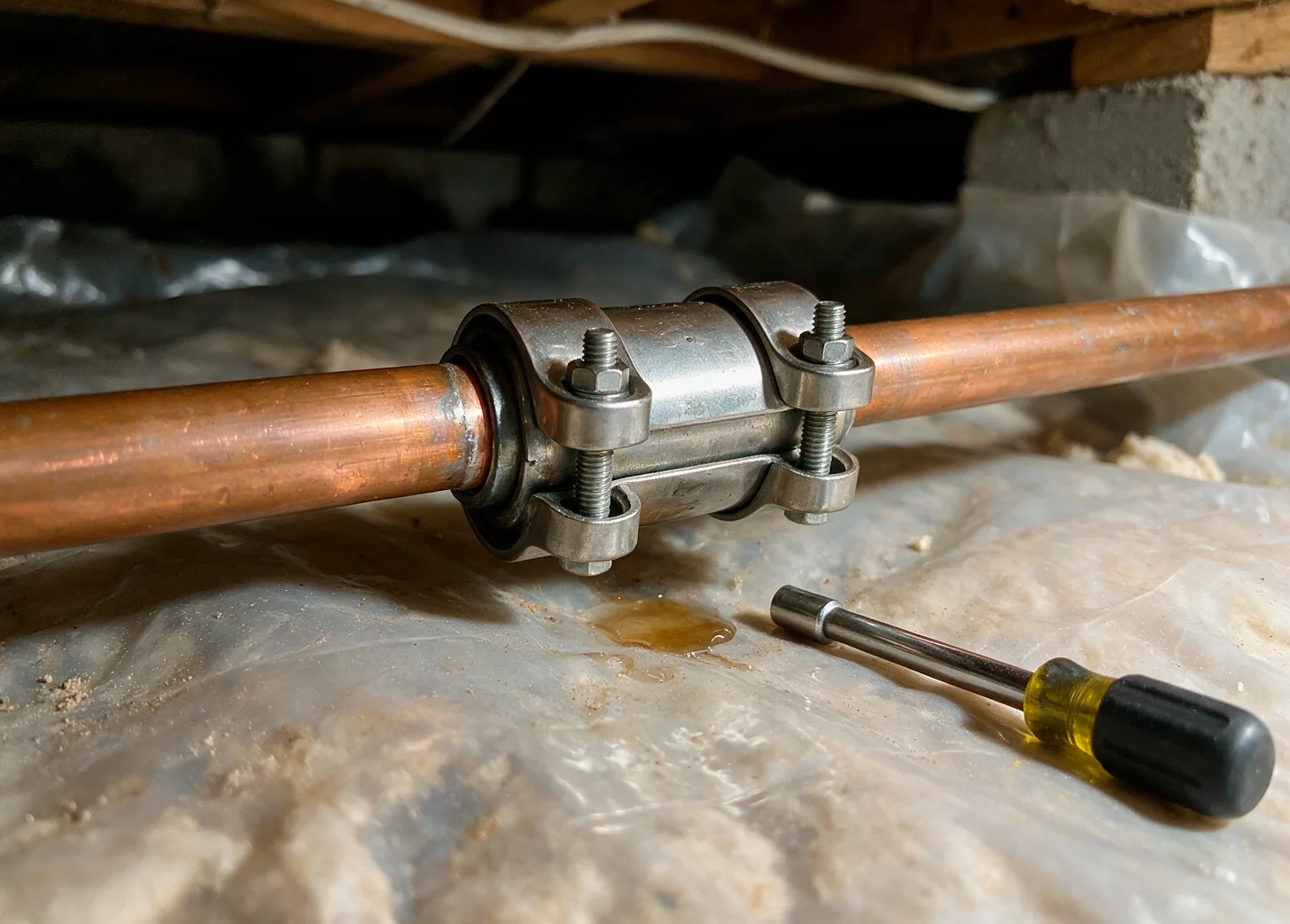
Where access is tight the crew may install a no-hub coupling or a stainless repair clamp rated for the line pressure. All new joints are pressure tested before walls or floors are closed.
Actions to Take Until Help Arrives
Turn off the main water valve if water is actively leaking or if pressure has dropped to a trickle. Place a bucket under any visible drip and avoid running water through the affected line until the crew arrives. Note which fixtures still work so the technicians can focus on the correct branch.
At night keep the area ventilated if sewage is involved and do not attempt to clear a blocked line with chemical products that can damage already weakened pipe walls.
Pipe Repair questions
How do you decide between a patch and full replacement?
Technicians measure remaining wall thickness and check the condition of nearby joints. If corrosion is widespread along the run a section replacement prevents repeat leaks. A single clean pinhole can often be repaired with a coupling when the rest of the line shows solid thickness.
What pipe materials do you carry for repairs?
Stock includes type L copper, PEX with crimp or expansion fittings, and schedule 40 PVC for drain lines. The choice matches the original pipe size and the pressure requirements of that portion of the system so flow and durability remain consistent.
Can a camera inspection be done without opening walls?
When an accessible cleanout or fixture drain is available the camera enters from that point and travels to the fault. Slab leaks require one small access hole to reach the pipe then the camera records the exact distance to the break before any larger opening is made.
What should I do if a pipe bursts after hours?
Shut the main valve first to stop the flow then open a cold faucet on an upper floor to relieve pressure in the lines. Move valuables away from the wet area and call so the crew can arrive with the correct pipe stock and tools for that material and location.
Arrange Pipe Repair
Describe the symptoms to our technicians so they can bring the right materials for the pipe type found in homes across the USA.