
Plumbing Repair in the USA
Plumbing Repair begins when water escapes from threaded joints, soldered seams, or worn valve seats inside walls or under floors. Our technicians trace the path of the leak using moisture meters and listening devices before deciding whether to tighten, replace a section, or reroute the line entirely. The goal stays the same: stop the loss of water and prevent damage to framing or finishes.
Different materials call for different repair techniques. Older homes often contain galvanized or copper lines that corrode from the inside while newer installations use PEX that can fail at crimp rings. We carry both copper and PEX fittings on every truck so the correct connection can be made without waiting for parts. When dealing with plumbing repair at night reach Luna Plumbing and review the homepage for drain cleaning across the USA.
Noticeable Changes Around Fixtures
- Drips continue after the handle is fully closed.
- Water pressure drops suddenly at one sink only.
- Dark spots appear on ceilings below bathrooms.
- Hissing or gurgling sounds come from pipes at night.
- Valves under sinks feel warm or show moisture.
Typical Points of Failure
Leaks most often start where pipe threads meet fixtures or where dissimilar metals touch without dielectric unions. Over time mineral buildup cracks the seating surfaces inside shutoff valves and supply stops. Our technicians check these spots first because they require only disassembly and new washers or cartridges in many cases.
Supply lines that run through exterior walls can freeze and split during cold snaps. When this happens the repair usually involves cutting out the damaged length and inserting a new piece with two proper couplings. We keep both sweat and push-fit couplings ready so the line can be restored the same visit.
Measurements Taken on Site
Static pressure is read at an outside hose bib and again at an interior faucet to determine if the main shutoff or a branch valve is restricting flow. Technicians also record the size and material of every visible pipe so replacement sections match exactly. These numbers guide whether a simple valve swap or a longer repipe segment is needed.
When a leak hides behind finished surfaces we may drill a small inspection port to confirm the pipe material and joint type. This step avoids unnecessary demolition and lets us bring the exact fittings required. Homeowners are shown the readings before any wall is opened further.
Repair Choices and Materials
For copper we can sweat new joints with lead-free solder or use compression fittings when flame is not practical. PEX sections are joined with either crimp rings or expansion fittings depending on the existing system. Both methods produce a permanent seal once pressure is restored and checked.
Shutoff valves are replaced with quarter-turn ball valves because they close fully with less effort and resist seizing. Supply tubes to toilets and faucets are swapped for braided stainless steel connectors that tolerate movement better than rigid copper risers. All new parts are chosen to match the existing pipe diameter.
Actions Before Arrival
Locate the main water shutoff and test that it turns without excessive force. If a leak is active turn the valve clockwise until flow stops then leave it in that position. Open a cold faucet on the lowest floor to drain remaining pressure from the lines and reduce the chance of further escape.
Move any stored items away from the suspected area so our technicians can reach the pipes quickly. Note which fixtures still have water and which have lost pressure; this information helps narrow the search once work begins. Keep pets secured in another room for safety during the repair.
Plumbing Repair questions
How do you decide whether to repair or replace a section of pipe?
We measure the length of damaged pipe and check the condition of the surrounding material. When corrosion extends more than a few inches past the leak or the pipe has already been patched before we recommend replacing a longer run to avoid future failures at nearby joints.
Can you fix a leak without cutting into the wall?
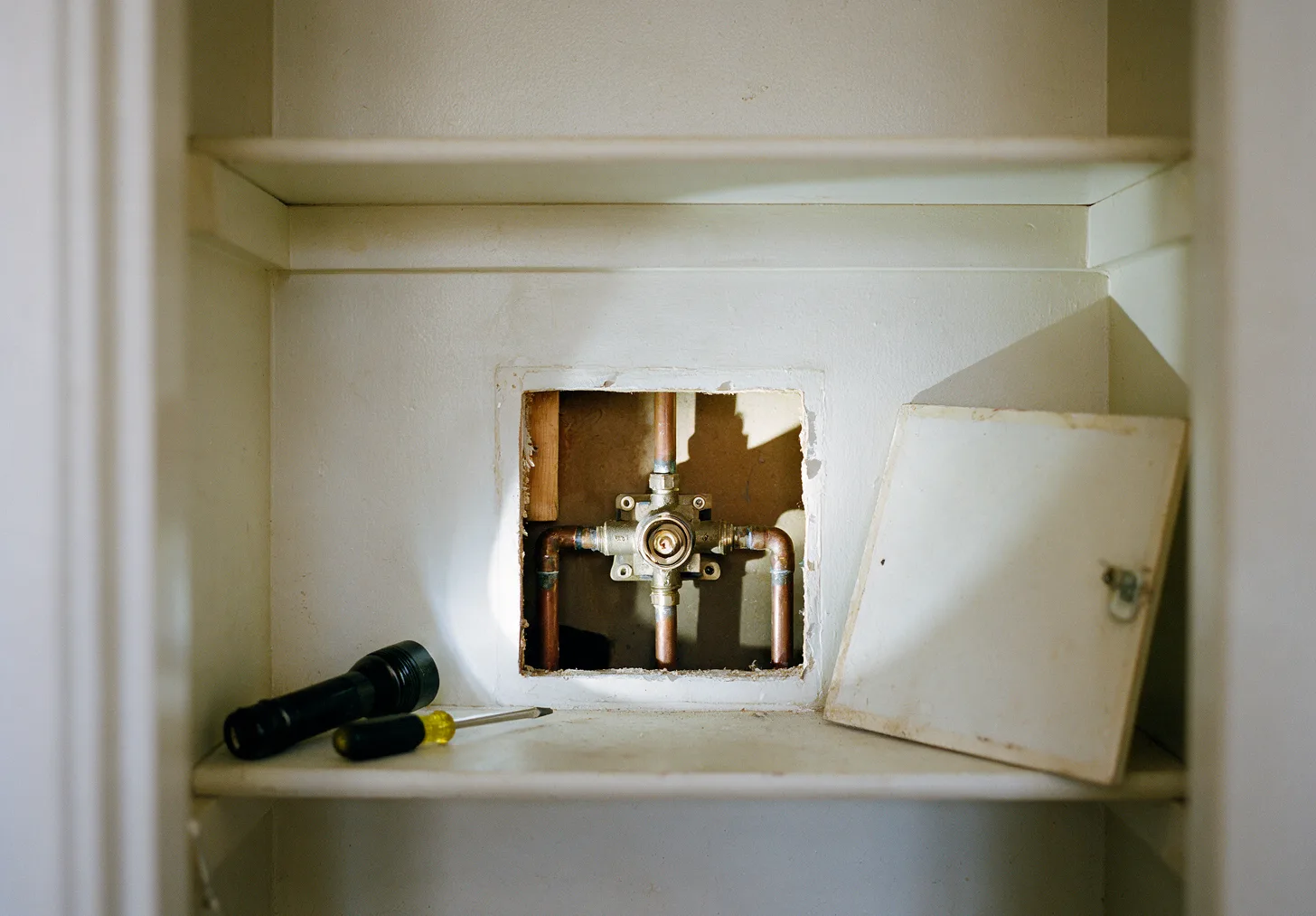
Access depends on where the pipe runs. If the leak is at an accessible valve or fitting we often complete the repair through an existing access panel or by removing a small section of drywall. Hidden lines in exterior walls may require a larger opening to reach the joint safely.
What type of valve lasts longest on a main water line?
A full-port ball valve made of brass or stainless steel resists seizing and provides unrestricted flow. These valves use a simple quarter-turn mechanism that remains reliable for decades when installed with proper support and without over-tightening the connections.
Will the repair affect water to the rest of the house?
Most branch repairs can be isolated so only one area loses water. When the main line itself must be opened the entire house supply is shut off for the duration of the work which is usually under two hours once access is gained.
Plumbing Repair for Your Home
Contact Luna Plumbing when leaks appear so our technicians can inspect and restore the system with the right parts.