
Leak Repair in the USA
Water leaks often start at joints, valves, or corroded sections where pressure fluctuations or age have weakened the seal. Our technicians begin by shutting off the main valve if the flow cannot be isolated at a fixture, then they test static pressure at multiple points to confirm the leak location before any excavation or wall opening occurs.
Once the source is isolated, the crew measures pipe diameter, wall thickness, and material type on site. They record these values because the repair choice depends on whether the line is copper, galvanized steel, PEX, or CPVC and whether access allows a targeted splice or requires a longer section replacement. Check the homepage for more on drain cleaning after Luna Plumbing completes your leak repair work anywhere in the USA.
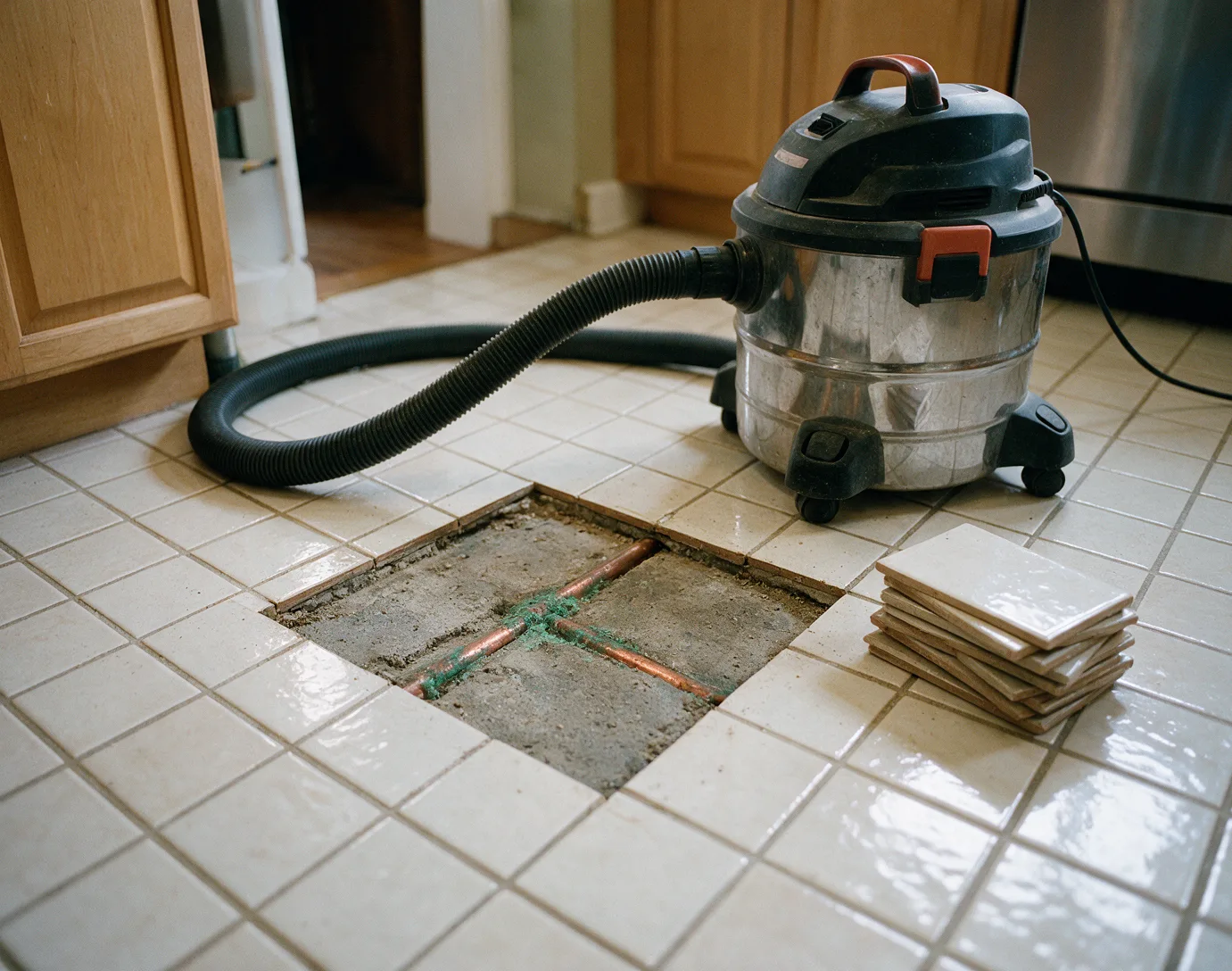
Early Indicators of an Active Leak
- Damp drywall or ceiling spots that reappear after drying
- Sudden drop in water pressure at one or more fixtures
- Continuous sound of running water when all taps are closed
- Musty odor near baseboards or under sinks without visible spills
- Higher than normal water meter reading during a two-hour shutoff test
What Technicians Measure During Diagnosis
Technicians attach a calibrated gauge to the main and to individual branch lines to record static and residual pressure. A drop greater than five psi between two points usually indicates the leak lies between those points. They also note water temperature because thermal expansion can open hairline cracks in older joints.
When visual access is limited they feed a waterproof camera through cleanouts or removed aerators. The video shows joint condition, scale buildup, and any offset or sag that concentrates stress. These observations guide whether a clamp, epoxy sleeve, or full coupling replacement will hold long term.
Repair Choices Matched to Pipe Condition
For accessible copper or PEX runs a compression coupling or crimp ring splice restores full flow without soldering. Where corrosion has thinned the wall the section is cut out and replaced with the same material rather than mixed metals that create galvanic action.
In slab or wall locations that cannot be opened easily technicians may install an internal epoxy liner after cleaning the pipe bore. The liner seals small pinholes while leaving the original pipe to carry structural load. Larger breaches still require excavation or wall opening for a conventional coupling.
Materials and Parts Kept on Service Vehicles
Stock includes lead-free brass compression fittings in common sizes, PEX expansion rings, copper press couplings, and stainless repair clamps rated for the local water pressure range. Thread sealant is PTFE tape only; pipe dope is avoided because it can migrate into aerators.
Shutoff valves are replaced whenever the leak is at an older gate or globe valve. New quarter-turn ball valves are installed because they close with less torque and resist seizing after long periods of inactivity. All replaced valves receive a tag noting the date and size for future reference.
What Homeowners Can Do Before Arrival
Locate and test the main shutoff valve so water can be stopped quickly if the leak increases. Place towels or a shallow pan under visible drips to limit floor damage and note the exact time the drip rate changes when fixtures are turned on or off.
Avoid using chemical drain cleaners on any line suspected of leaking because the agents can enlarge existing holes. If the leak is near an electrical outlet turn off power to that circuit at the panel to reduce shock risk before water spreads.
Leak Repair questions
How do you find a leak inside a wall or slab?
We first isolate sections by closing valves and watching the meter for continued movement. A camera is then run from the nearest cleanout or fixture opening. Pressure gauges confirm the section losing pressure while the camera shows joint or pipe condition without removing drywall until the exact spot is marked.
Can a small drip be fixed without replacing the whole pipe?
When the surrounding pipe wall remains sound a stainless clamp or epoxy sleeve can seal the drip. The repair is pressure tested afterward to verify no weeping occurs at operating pressure. If the wall shows pitting or prior repairs nearby the affected length is cut out and replaced instead.
What pipe materials do you use for replacements?
We match the existing material whenever possible to avoid dielectric unions and expansion mismatches. Copper press fittings or PEX with expansion rings are common choices because both allow dry installation and resist corrosion in typical domestic water chemistry.
Should water be shut off at night if a leak is suspected?
If the drip is steady and not near electrical outlets the main can usually stay open until morning. Place a bucket to catch water and avoid running large fixtures. When the sound of flowing water continues with all taps closed shut the main and leave it off until a technician arrives.
Schedule Leak Repair
Tell us the fixture or area showing moisture and we will advise on the first steps before a technician reaches the site.